
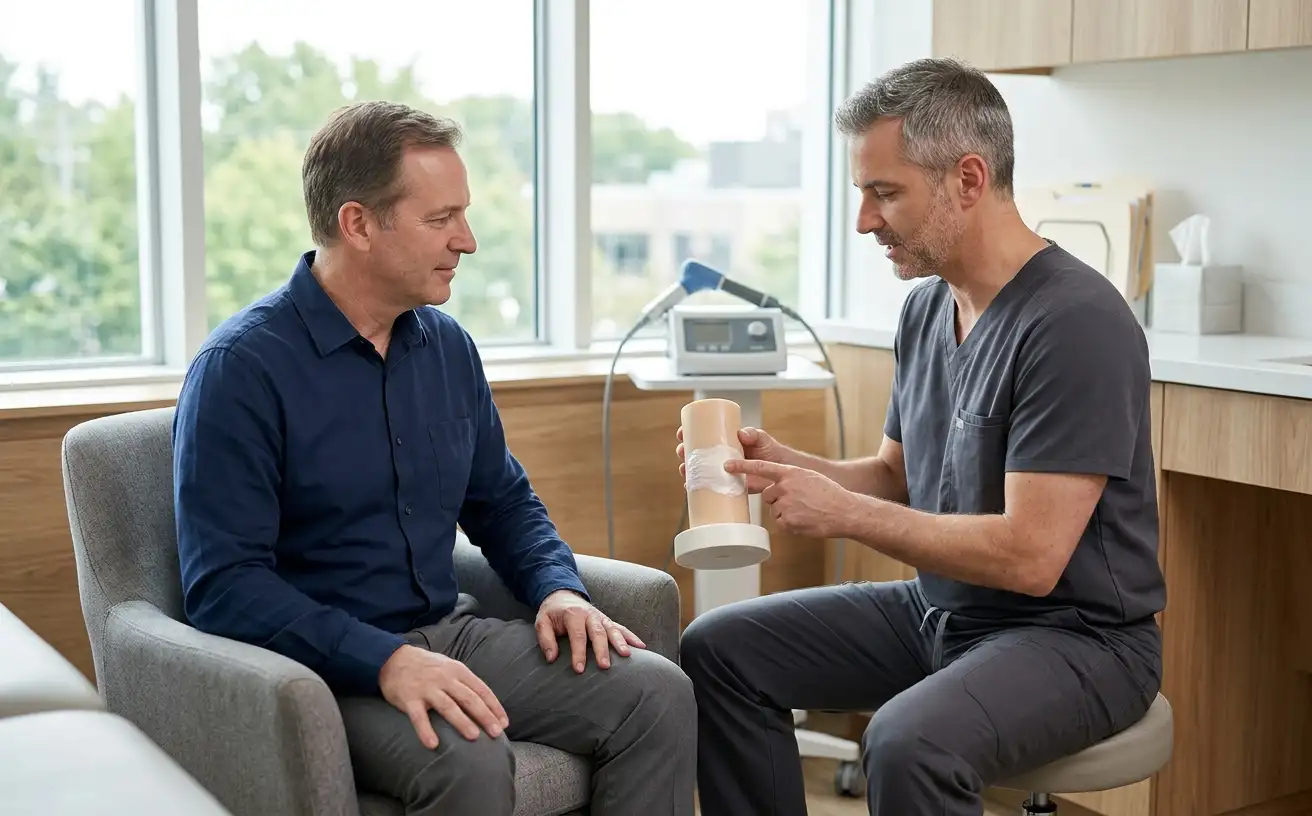
Peyronie’s disease is more common than many men realize, yet it is rarely talked about openly. It can cause curvature, discomfort, and anxiety, and many men are unsure whether what they are experiencing is normal or treatable. Understanding the condition is the first step toward addressing it. At Centrepointe medical consultants in Ottawa, men’s sexual health is treated with discretion and expertise, including effective options for Peyronie’s disease. Here is a clear explanation of its causes, symptoms, and treatment.
What Is Peyronie's Disease?
Peyronie’s disease is a condition in which fibrous scar tissue, called plaque, forms beneath the skin of the penis. This plaque can cause the penis to bend or curve, particularly during an erection, and may lead to pain or difficulty with sexual function.
It is important to understand that a natural, slight curvature is common and not a cause for concern. Peyronie’s disease is different: it involves the development of scar tissue that can cause a more pronounced curve, discomfort, or a noticeable change over time. The condition is not the result of anything a man has done wrong, and it is treatable.
What Causes Peyronie's Disease?
The exact cause of Peyronie’s disease is not fully understood, but it is generally believed to be linked to injury or trauma to the penis, which may be minor and even go unnoticed. When the tissue heals, scar tissue can form in a way that leads to curvature.
Several factors are thought to play a role in who develops the condition:
- Injury or trauma: Minor or repeated injury that triggers scar tissue during healing.
- Genetics: A family history may increase the likelihood.
- Age: The condition becomes more common as men get older.
- Connective tissue conditions: Certain conditions affecting the body’s connective tissue may be associated.
Because the causes are not always clear, a professional assessment is valuable for understanding an individual case and ruling out other concerns.
Recognizing the Symptoms
Peyronie’s disease can present in different ways, and symptoms may develop gradually or appear more suddenly. Common signs include a noticeable curve or bend in the penis, pain during erections or sexual activity, a lump or area of hardness that can be felt beneath the skin, and, in some cases, difficulty achieving or maintaining an erection.
The condition typically progresses through two phases. In the active phase, symptoms such as pain and curvature may still be changing. In the stable phase, the curvature and plaque have generally settled and stopped progressing. Identifying which phase a man is in helps guide the most appropriate treatment.
How Peyronie's Disease Is Treated
The good news is that Peyronie’s disease can be treated, and a range of options exists depending on the severity and phase of the condition. Treatment approaches vary from non-invasive options to, in more severe cases, surgical intervention.
Among the non-invasive approaches, men’s shockwave therapy has become an option of interest, using acoustic waves to target the plaque and encourage the body’s natural healing responses. Because Peyronie’s disease and erectile difficulties can sometimes occur together, treatments that support sexual function, such as the priapus shot and regenerative prp treatment approaches, may also be relevant for some men. A clinician can explain which options suit your situation and discuss practical considerations such as penile shock wave therapy cost.
When to Seek Help
Many men delay seeking help for Peyronie’s disease out of embarrassment, but there is no need to face it alone or simply hope it resolves. If you notice curvature, pain, or a lump, or if the condition is affecting your confidence or relationships, it is worth speaking with a clinician.
Early assessment is particularly valuable during the active phase, when the condition is still developing. A professional evaluation can clarify what you are dealing with, rule out other issues, and outline the treatment options available. Peyronie’s disease often occurs alongside other men’s health concerns, and the clinic also provides care for erectile dysfunction and related conditions, including a range of ed medication options where appropriate.
Talk to Someone Who Understands
If you think you may have Peyronie’s disease, a confidential conversation with a knowledgeable clinician can bring clarity and reassurance. Contact our clinic at 613-224-6151 or visit 106 Centrepointe Drive in Nepean to book a discreet consultation and learn about the treatment options available to you.